2015 Annual Report
Weighting the Census
What is the Census?
The Census is a collaborative research project that started in 2002.
Although the BRC Census is technically a survey and not a real census (where everyone in a population was sampled), we aspire to be a true census where everyone voluntarily participates.
Until that day, we will continue to provide the most complete picture possible of the highly diverse population of Black Rock City.
Method and Weighting Procedures
A research ethics committee (@ Denver University) approved the project. Respondent confidentiality is protected.
This is the 5th consecutive year when results were weighted to correct for non-response biases, making the results the most reliable estimates concerning the BRC population.
Unbiased reference: random sample of cars at the gate during ingress, asking nine sociodemographic questions of each sampled Burner who accepted.
The weighting procedure corrects biases due to self-selection in the after-event, online survey. (i.e., Burners who decided to fill out the Census might be different from those who chose not to fill it out).
Thus, the results were weighted according to this random sampling, improving the collective accuracy of the data.
Census Results
These results are the most reliable estimates that we have of the Black Rock City population. The “real” population values could be slightly different from the presented values due to measurement error.
Confidence intervals were not included in the graphs. However, these confidence intervals are very small due to the sheer number of survey participants.
More precisely, the margin of error for most of the estimated proportions is roughly 1% or less, 19 times out of 20. In other words, you can safely estimate that the 95% confidence interval of most proportions presented herein equals more or less the stated value +/-1%.
For more results, visit us on the playa (near Center Camp) and follow the Census Lab’s blog at http://journal.burningman.org/census
Variables Used to Weight the Census
Variables used to weight the 2015 Census:
- Day of arrival
- Gender
- Age
- Virgin Burner or not
- US Resident or not
- English as a first language or not
- US Party Affiliation (if eligible to vote in the US)
- Voting behavior
Sociodemographic Characteristics
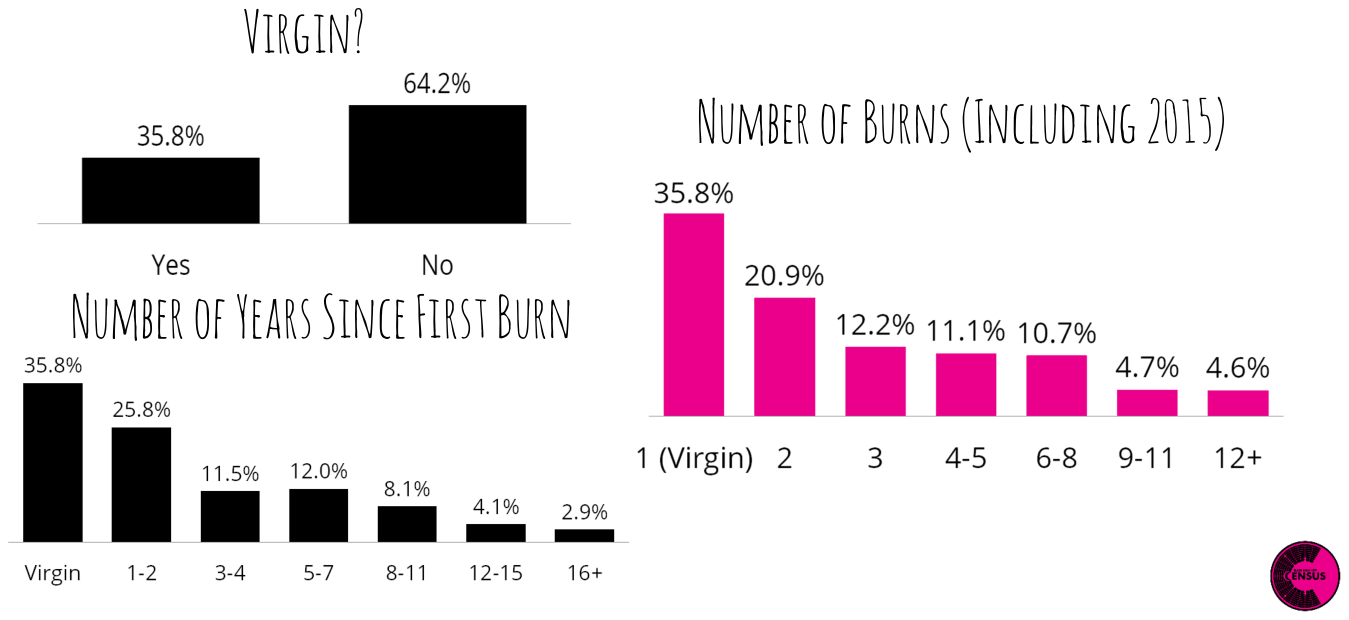
Prior Burning Man Experience
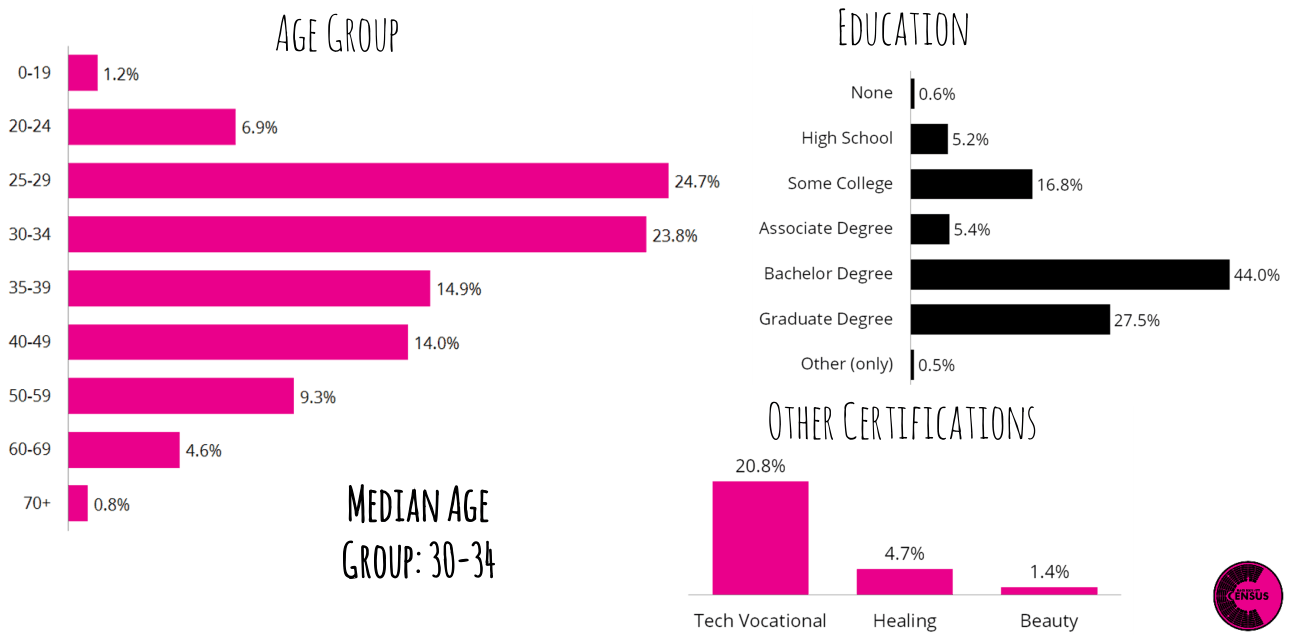
Age and Education
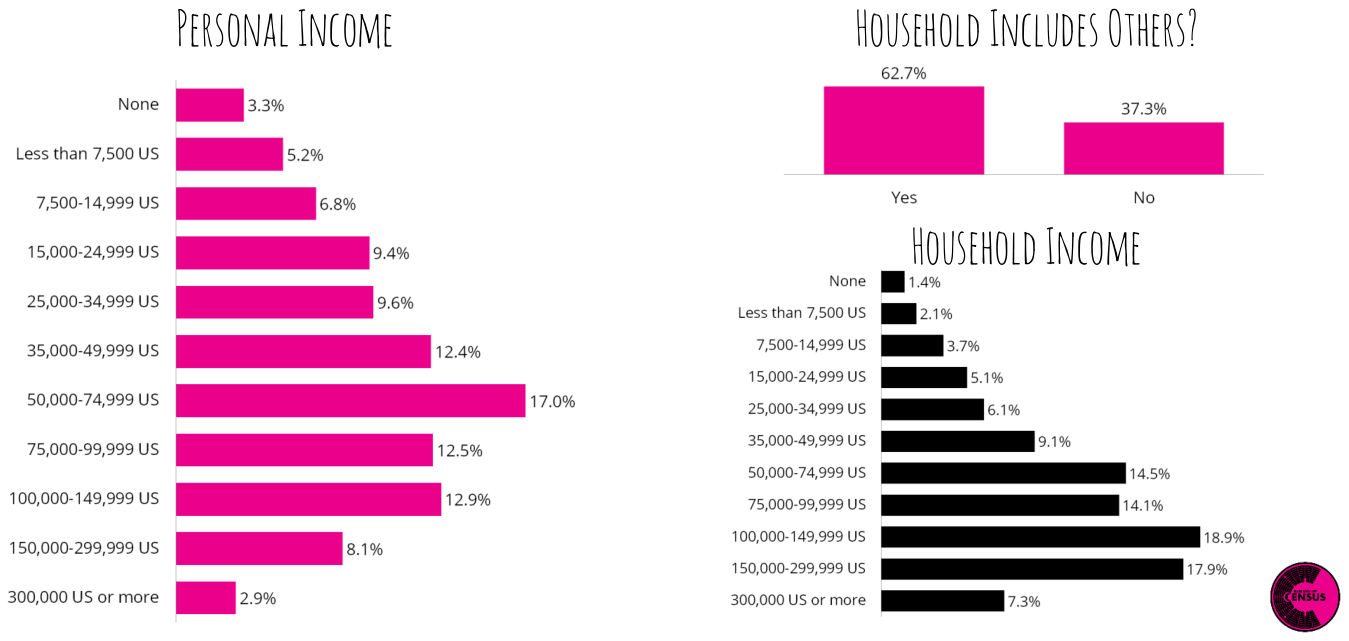
Personal and Household Income
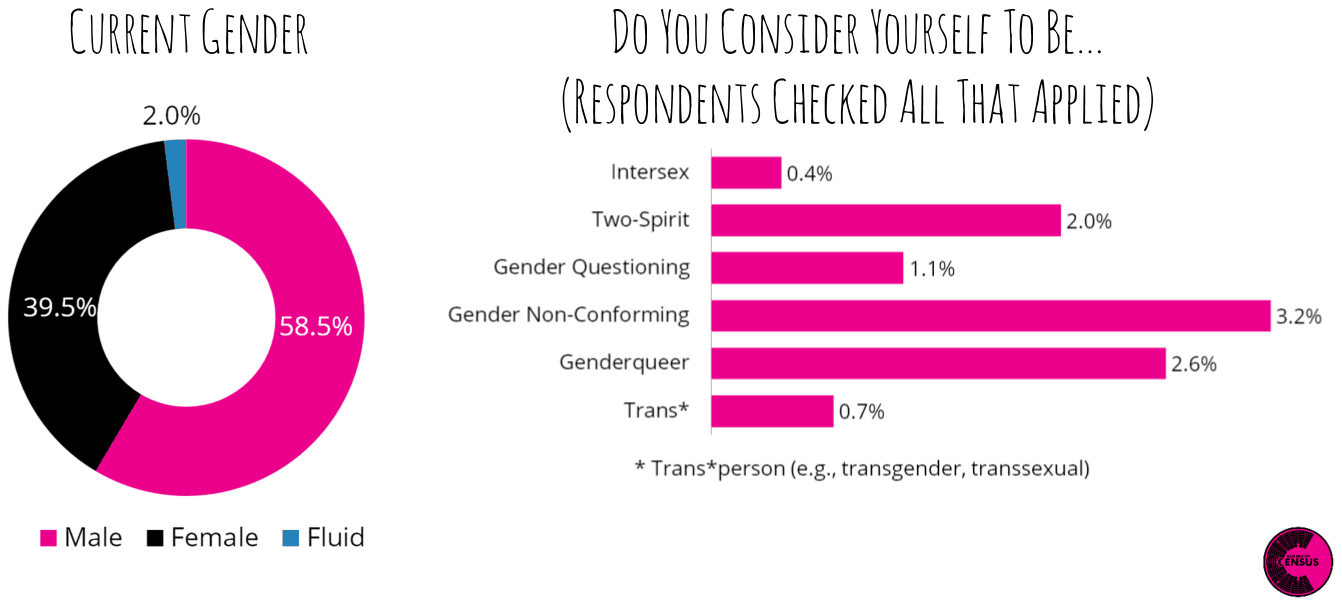
Sex and Gender
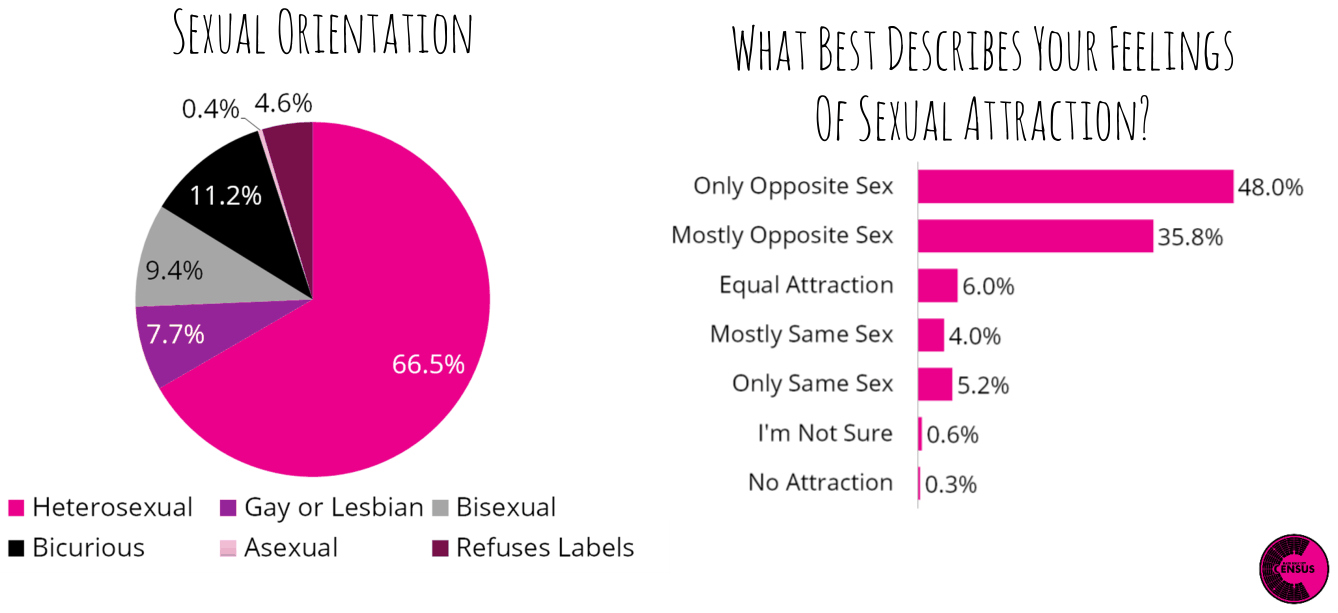
Sexual Orientation and Attraction
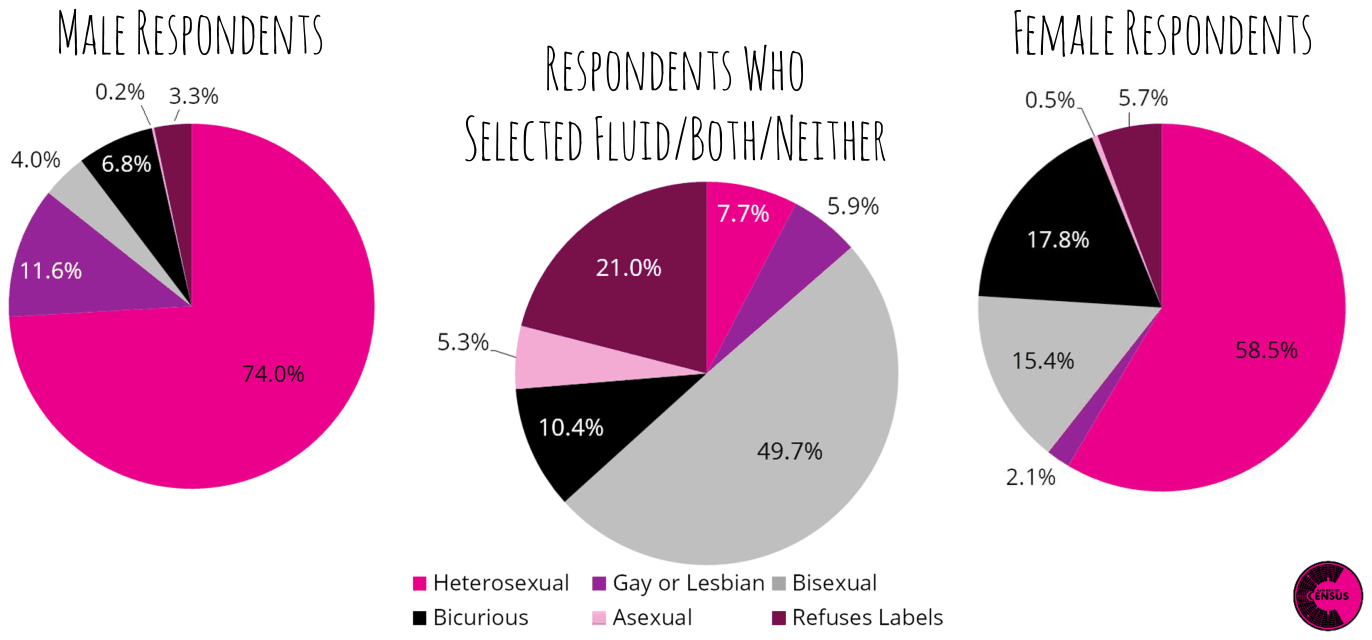
Sexual Orientation by Gender
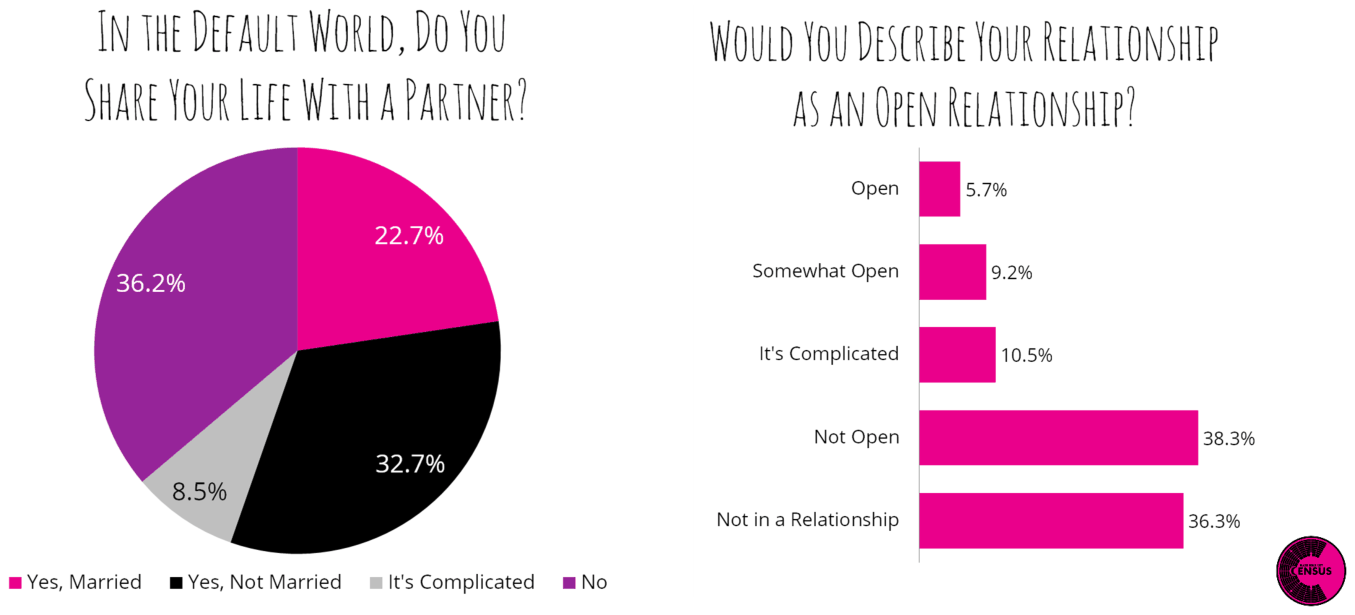
Relationship or Marital Status
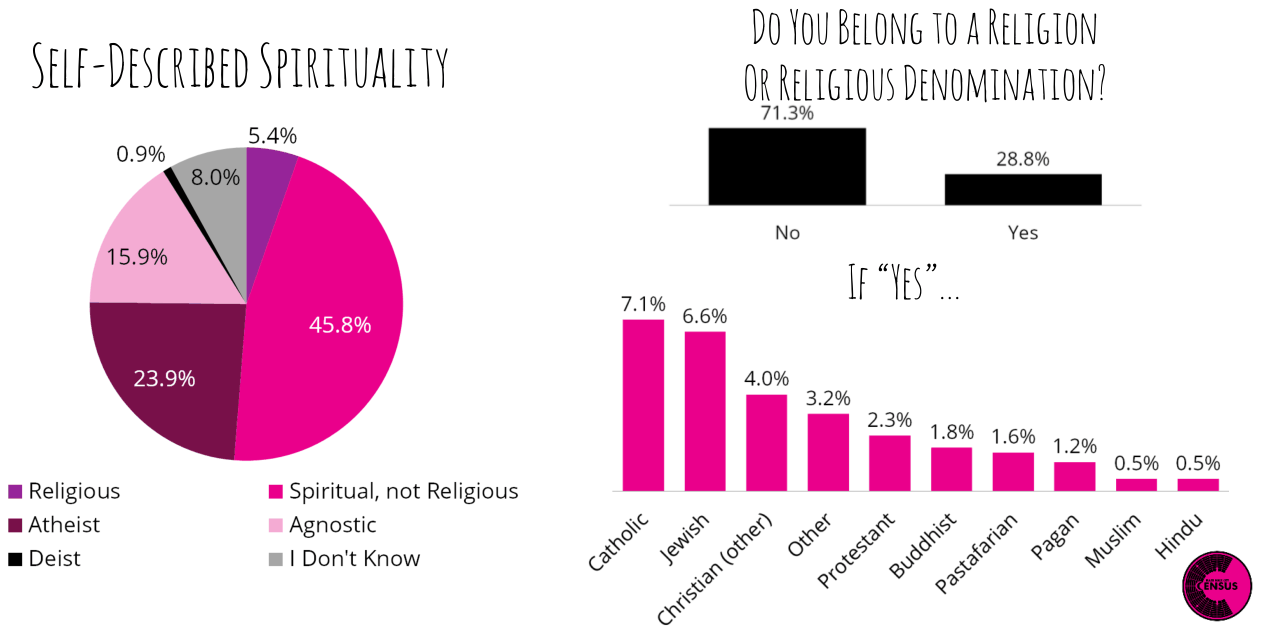
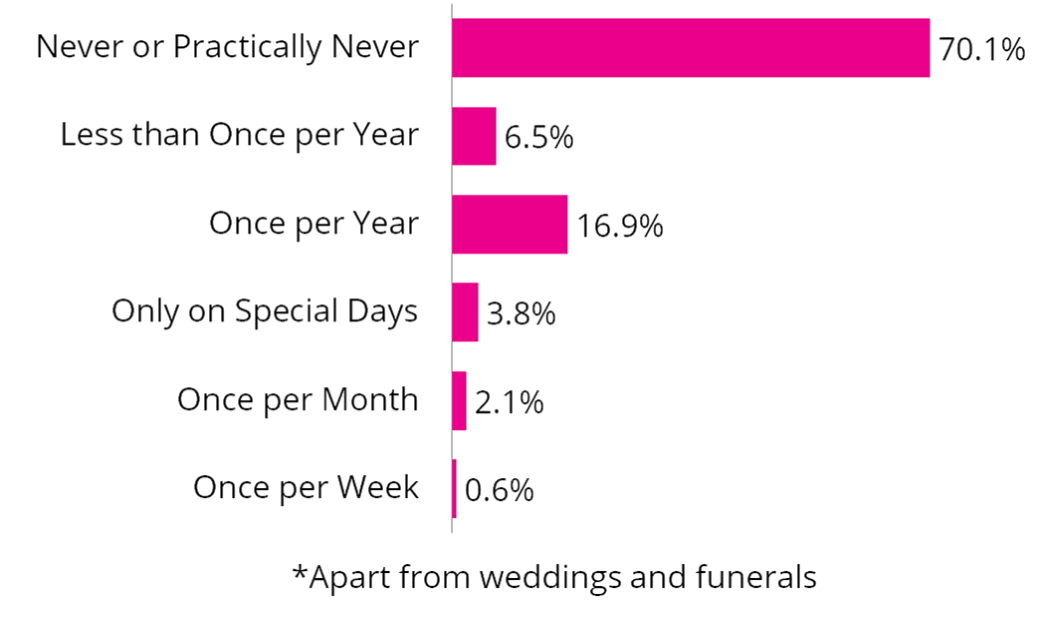
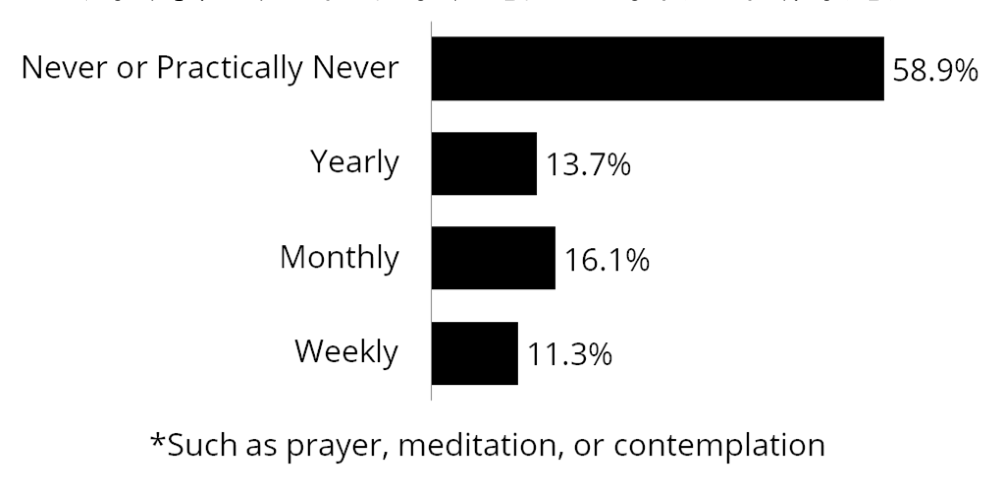
Religion and Spirituality
How Often Do You Attend Religious Services How Often Do You Engage in Practices*
or Practice Group Rituals*? for Spiritual or Religious Purposes?
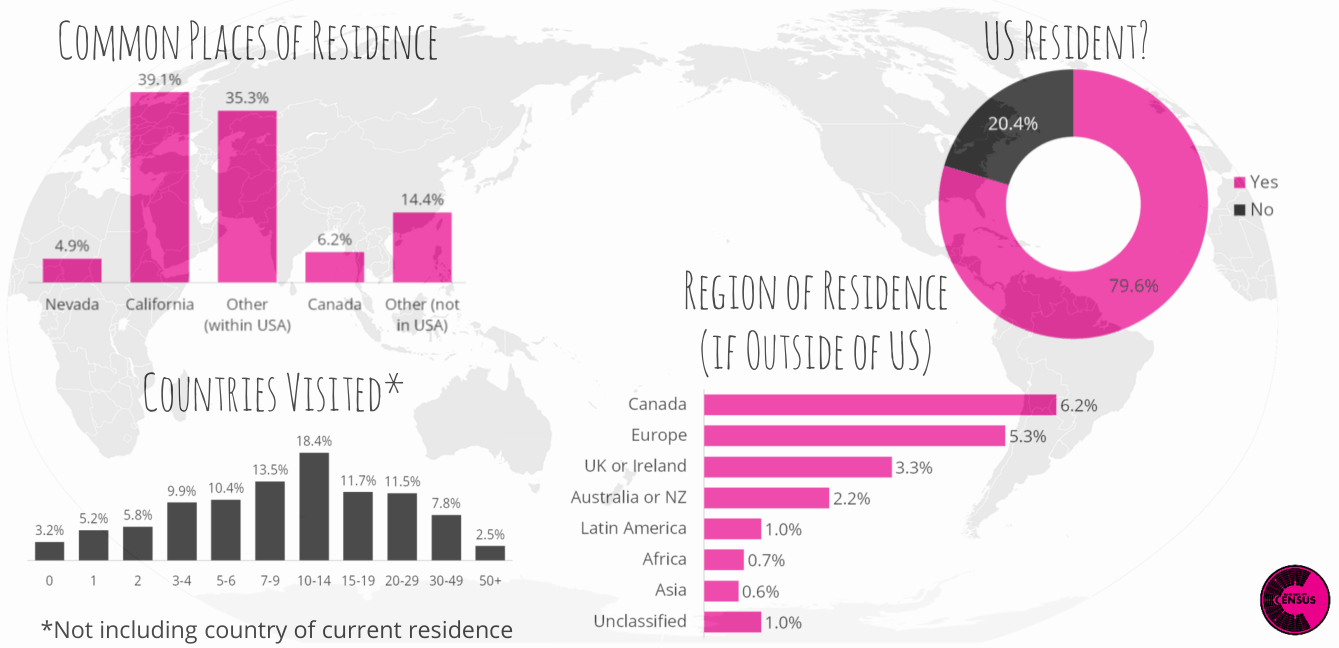
Current Place of Residence
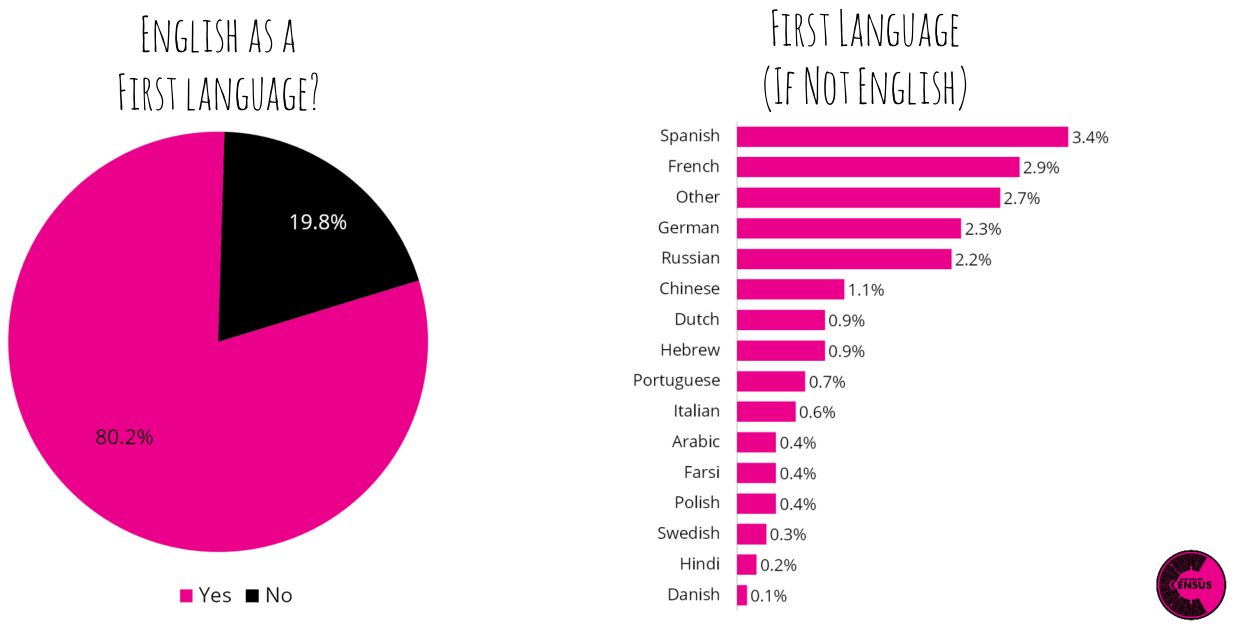
First Language Learned
Election Participation
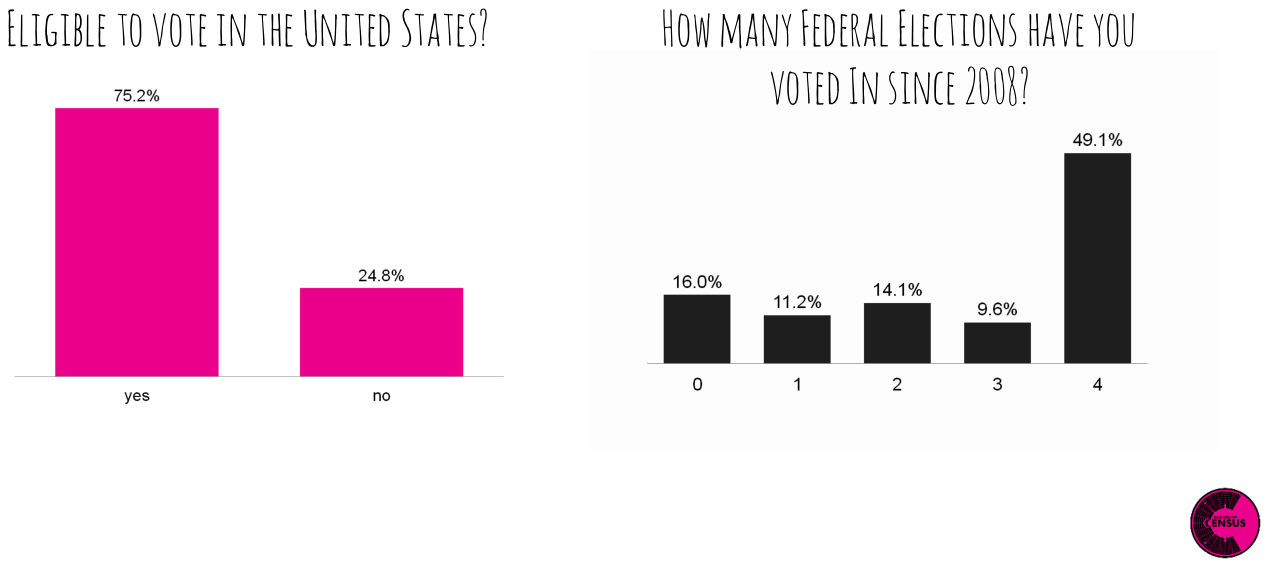
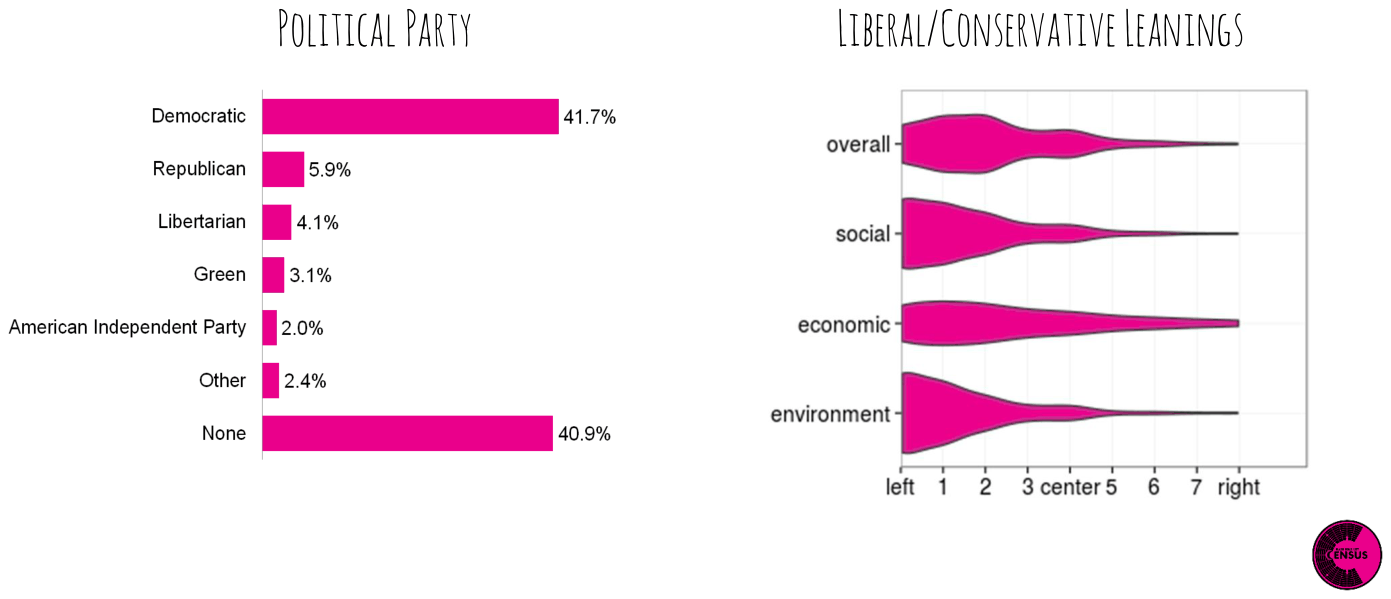
Political Spectrum in BRC
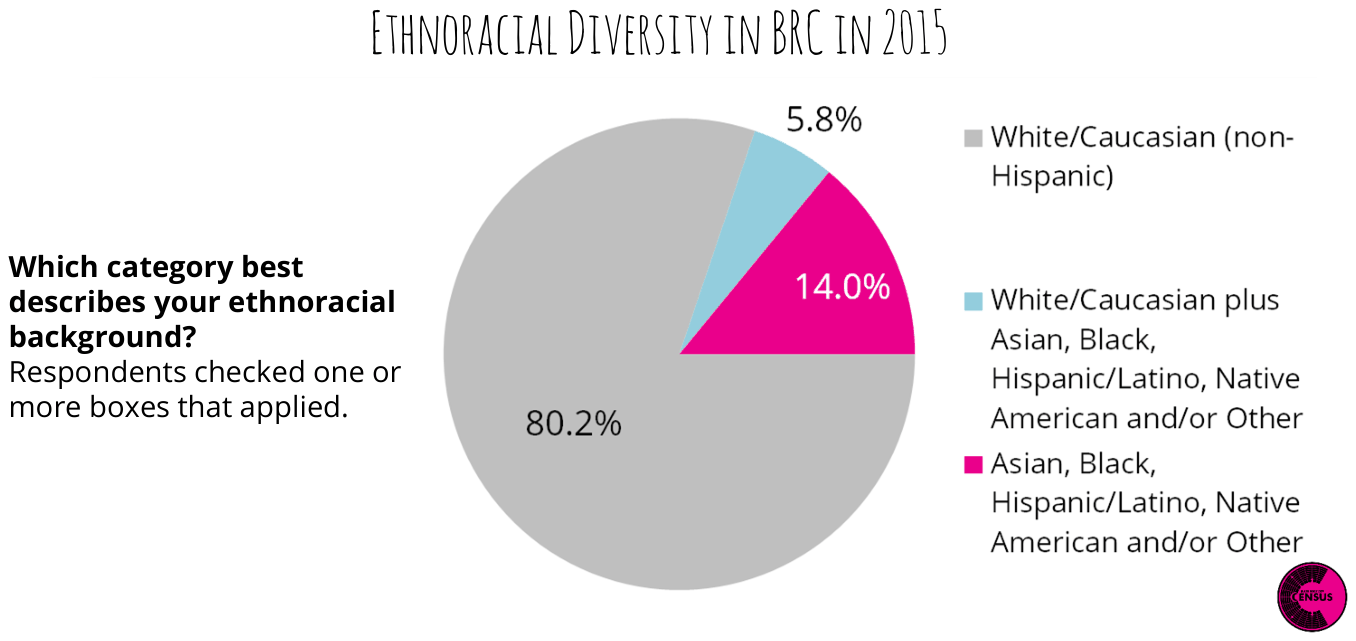
Ethnoracial Characteristics
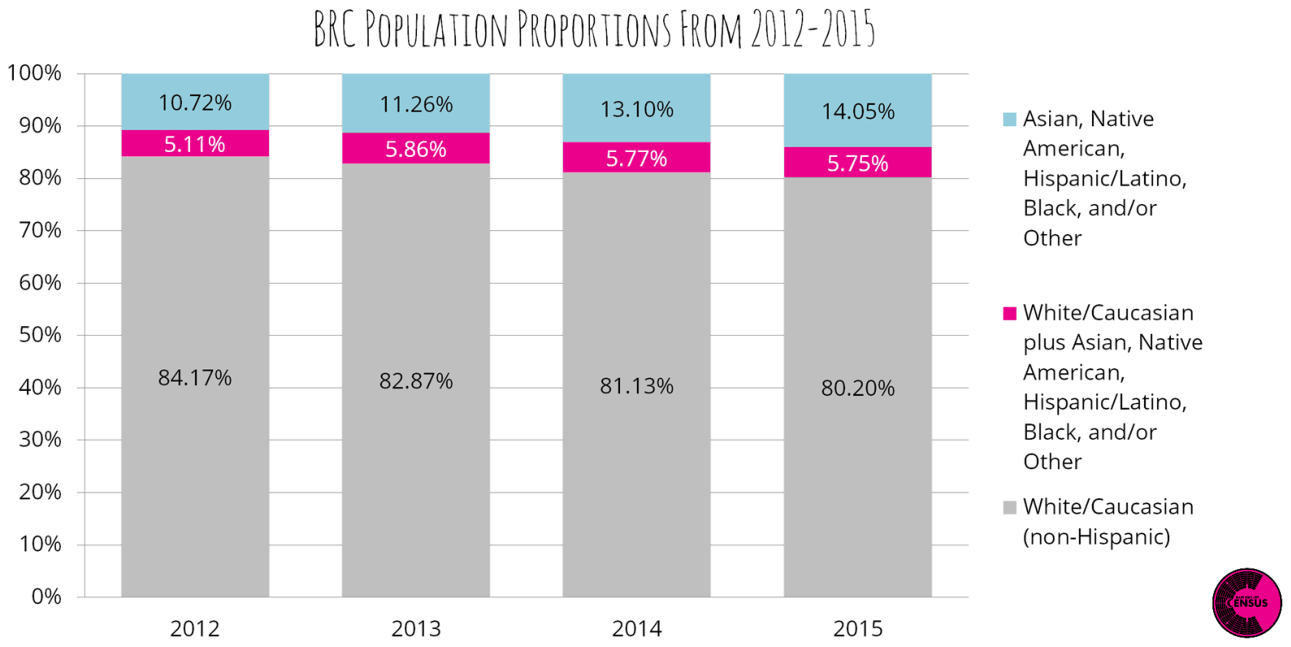
Ethnoracial Composition
Proportion of Hispanic/Latino, Asian, Native American, and Black Respondents
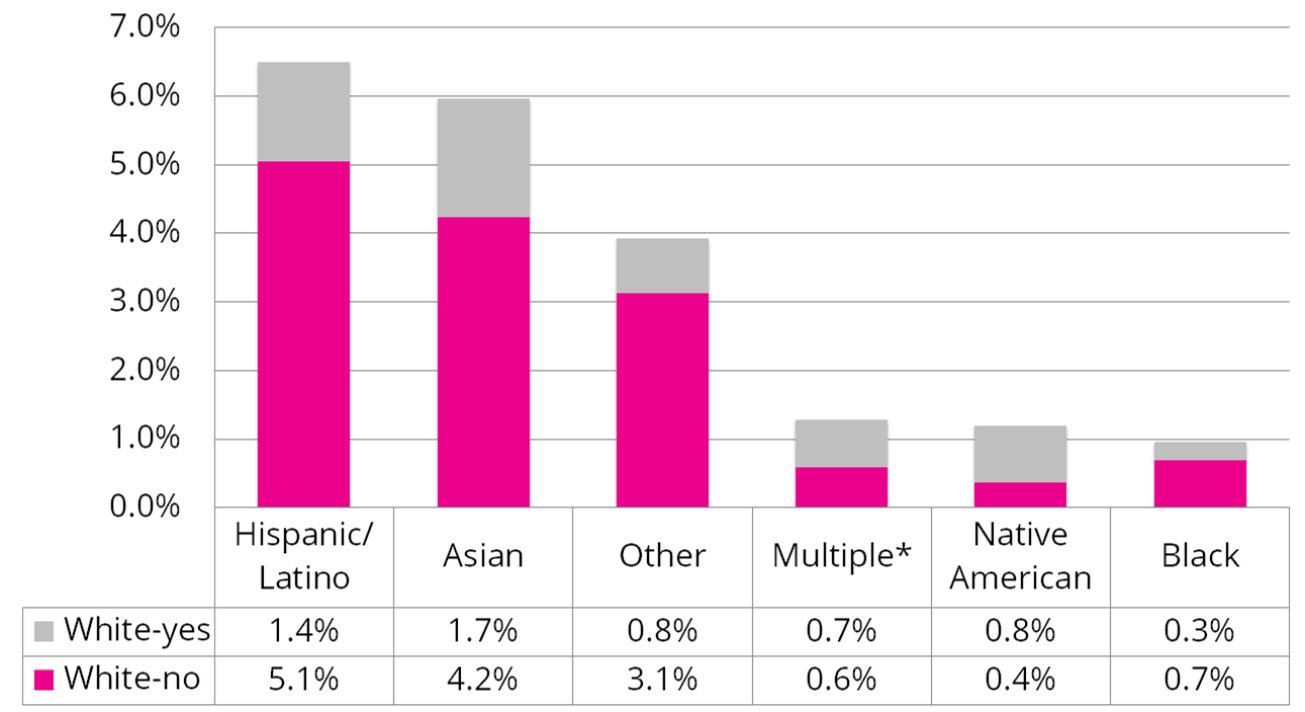
Each percentage point in this chart represents approximately 700 BRC citizens.
"White-yes" refers to respondents who selected White/Caucasian (non-Hispanic) in addition to another category. "Multiple*" refers to respondents who selected two or more categories other than White/Caucasian.
Population Trends
Self-Identity as a Person of Color
Do You Consider Yourself To Be a Person Of Color? (Respondents Selecting a Single Ethnicity)
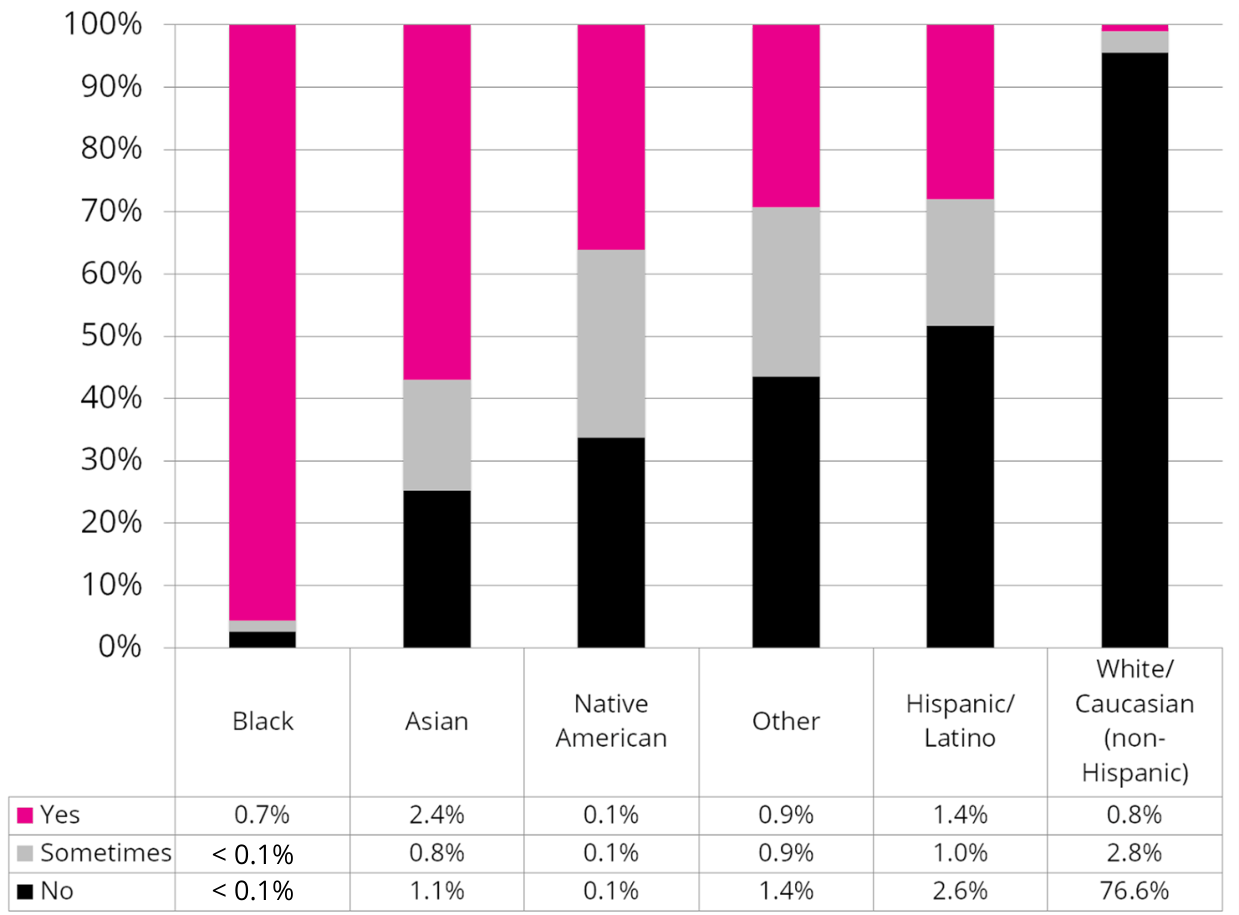
These respondents selected a single race/ethnicity. Together they total 93.7% of the BRC population.
Each column shows the proportion within each group that answered “yes,” “sometimes,” or “no.”
The numbers below each column specify the proportion of the total population that answered each way.
Do You Consider Yourself To Be a Person Of Color? (Respondents Selecting More than One Ethnicity)
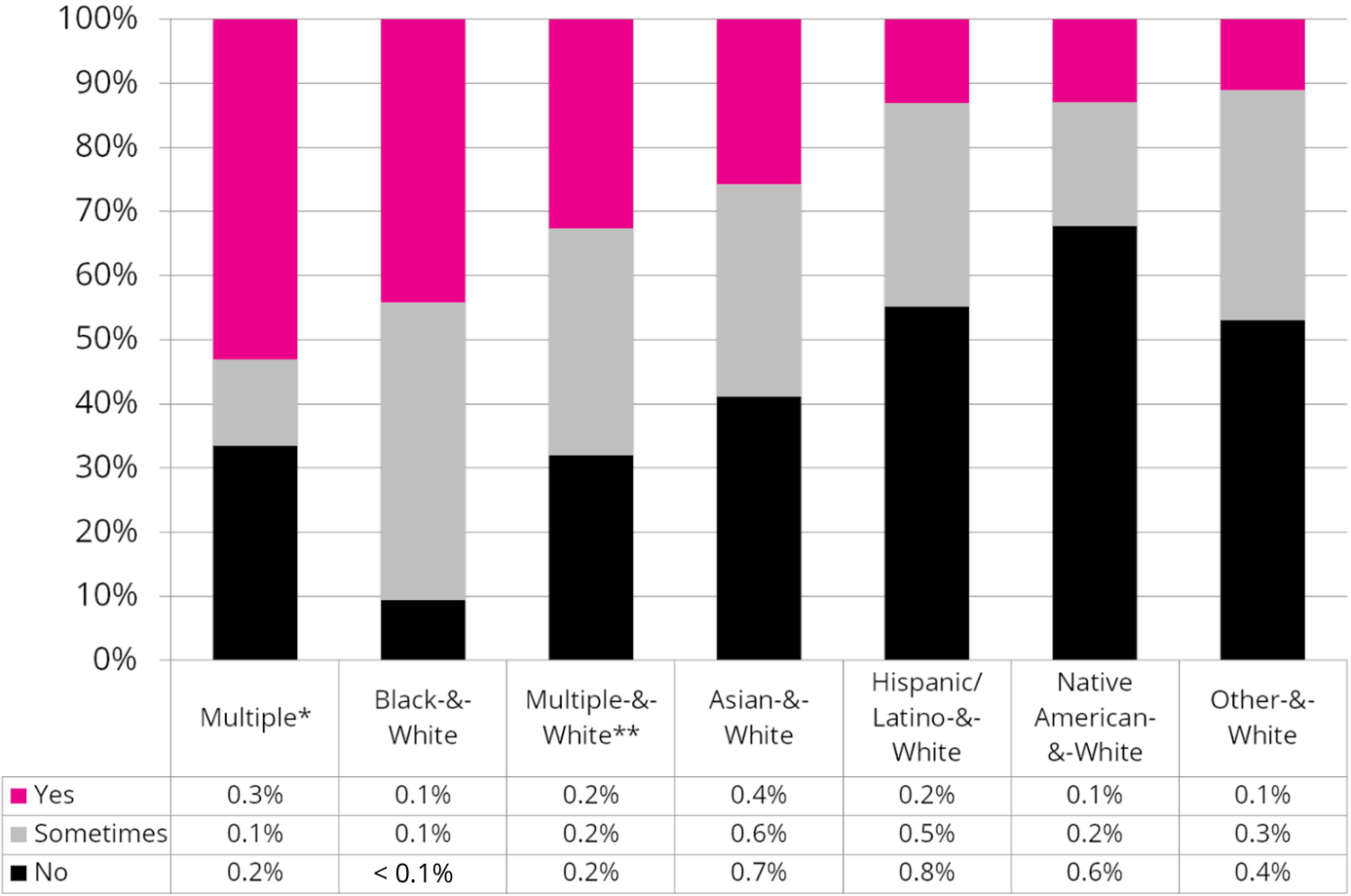
These respondents selected more than one race/ethnicity. Together they total 6.3% of the BRC population.
Each column shows the proportion within each group that answered “yes,” “sometimes,” or “no.”
The numbers below specify the proportion of the total population that answered each way.
“Multiple*” refers to respondents who selected two or more categories not including White/Caucasian.
“Multiple-&-White**” refers to respondents who selected three or more categories including White/Caucasian.
Burning Man-Related Variables
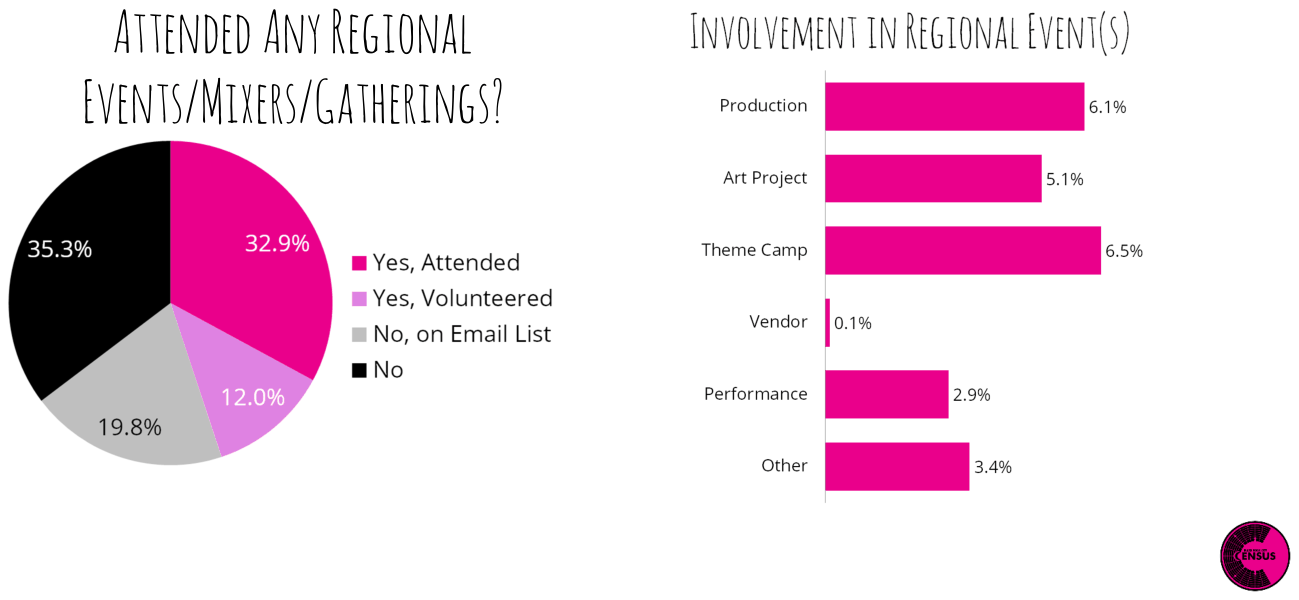
Regional Involvement
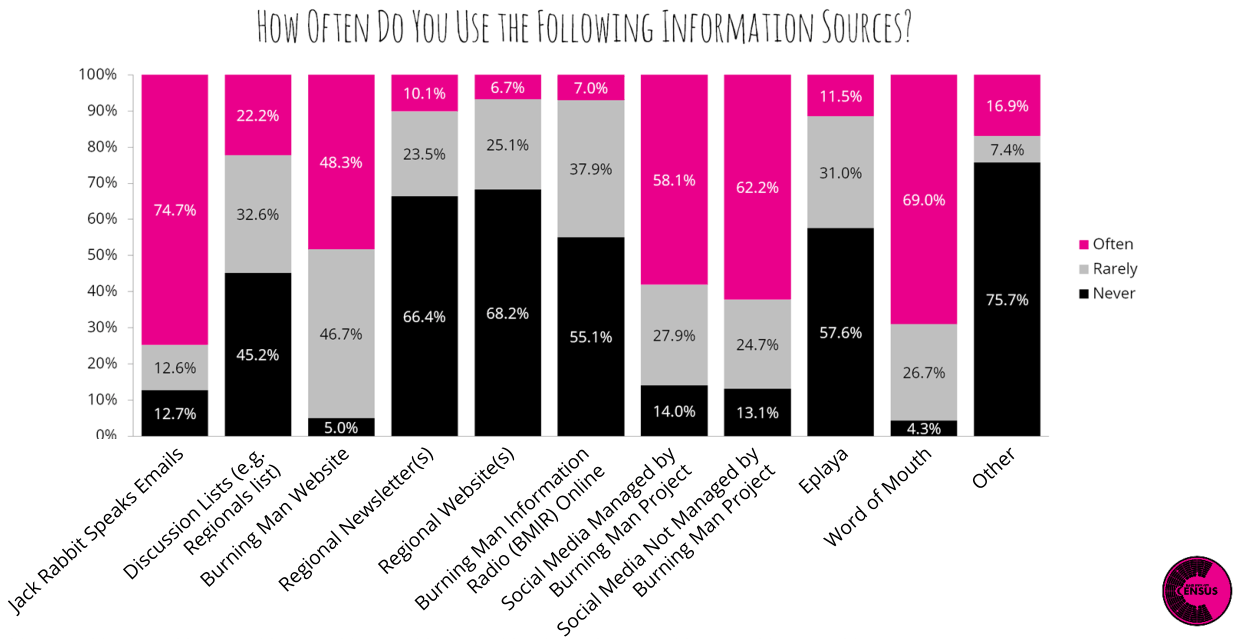
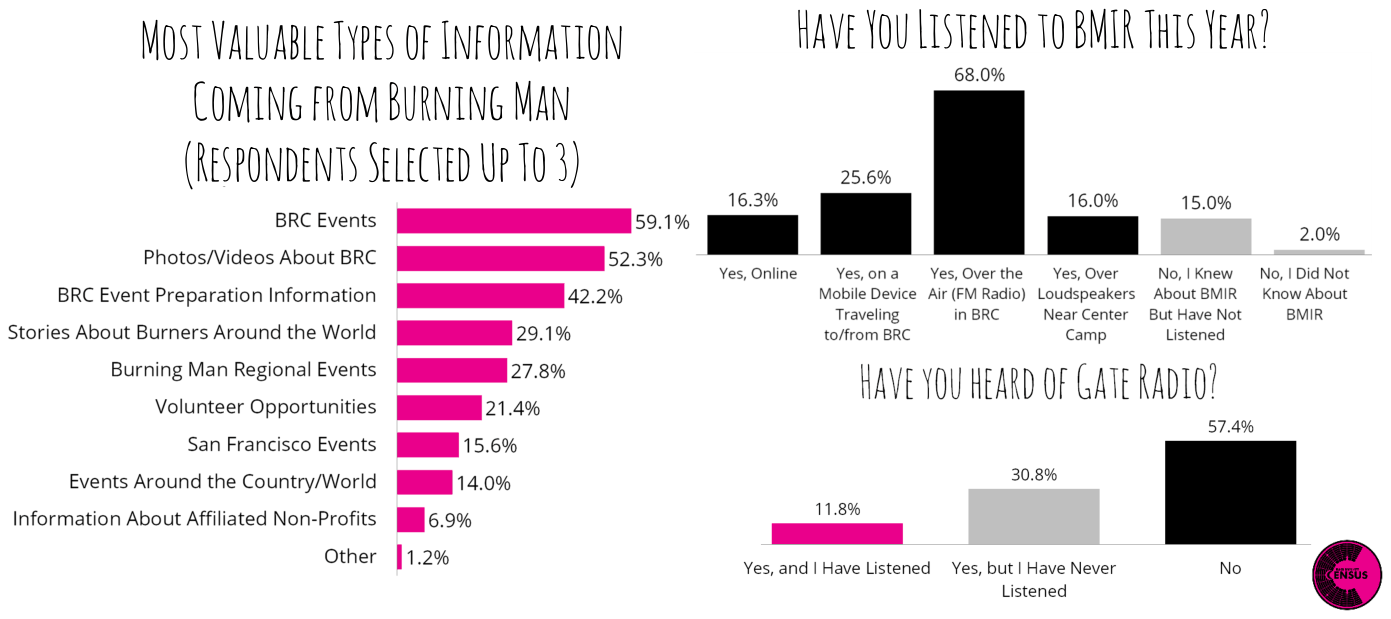
Event Information
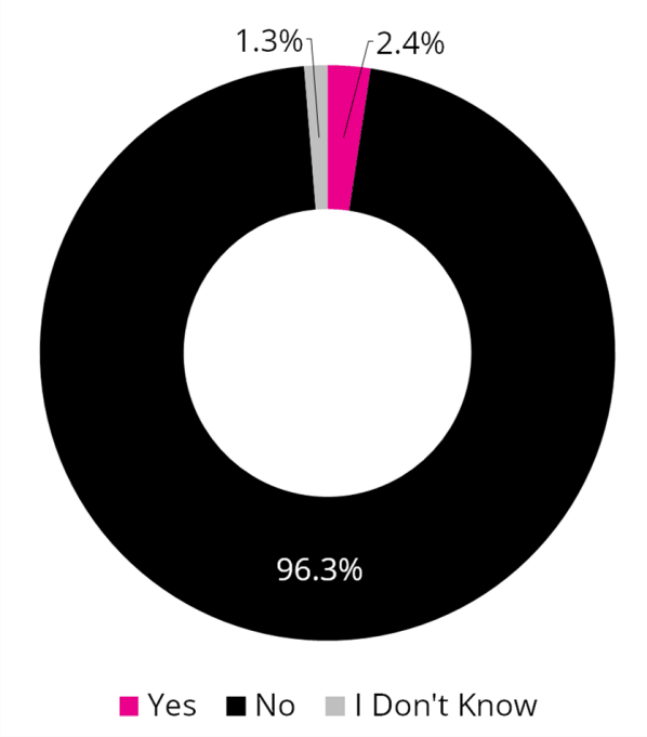
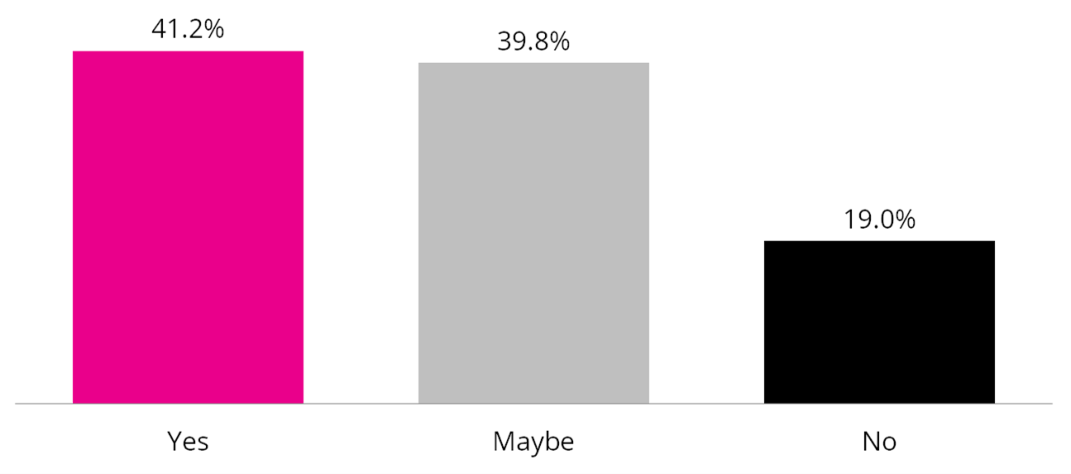
Global Leadership Conference
Have You Ever Participated in
if Burning Man Hosted The Burning Man GLC?
a GLC for the Public, Would You Be Interested in Participating?
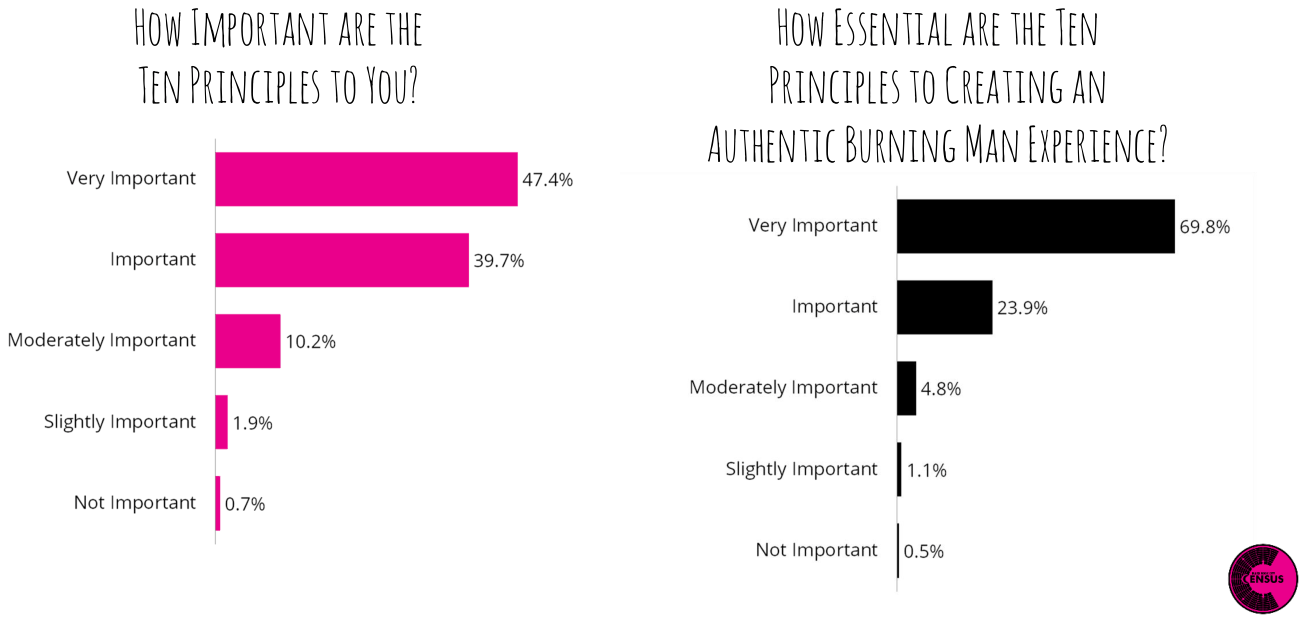
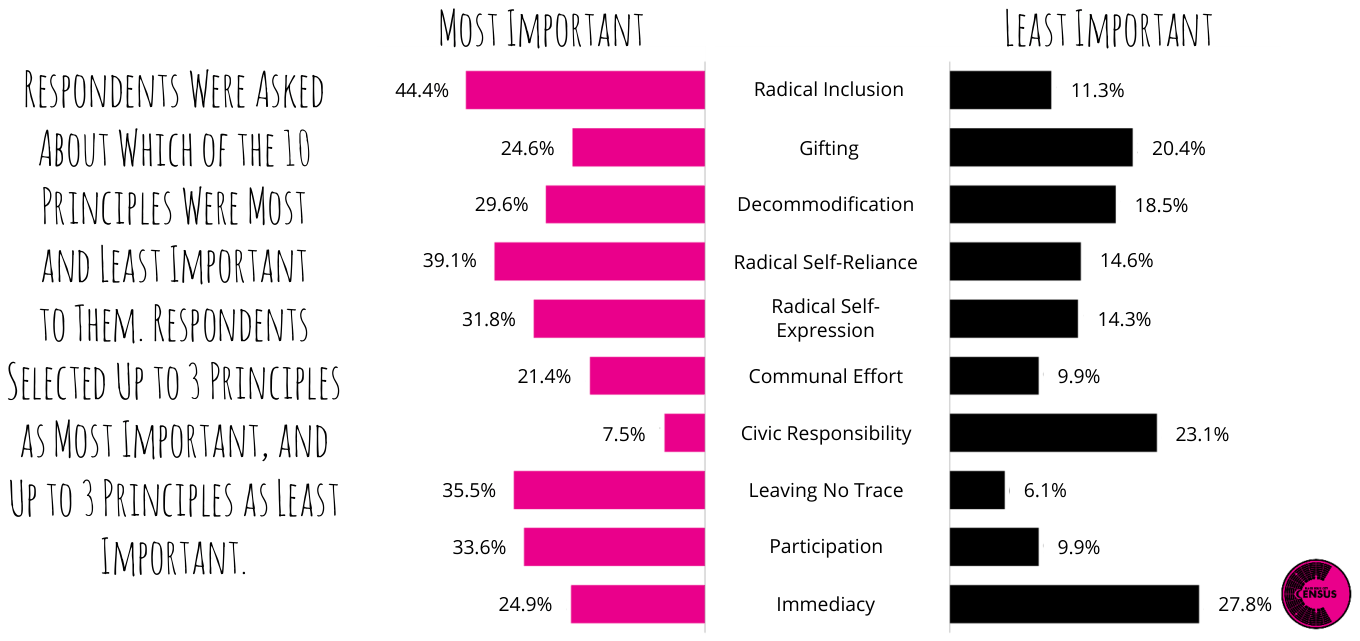
The Ten Principles
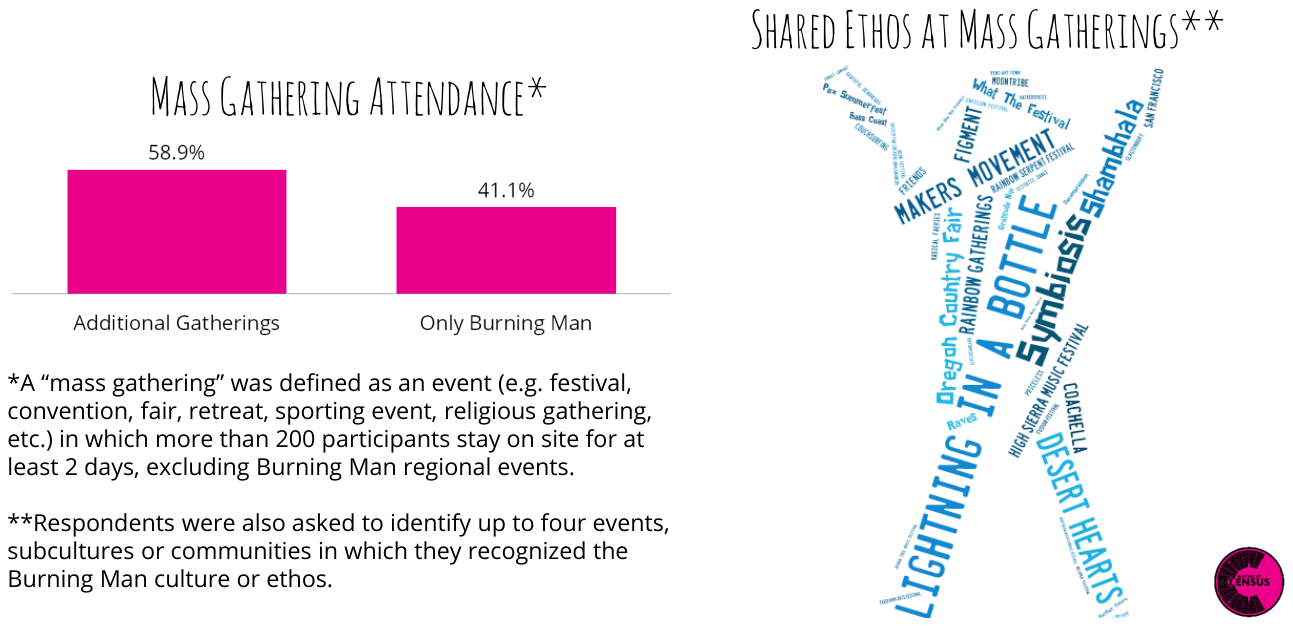
Other Multi-Day Events
Life in Black Rock City
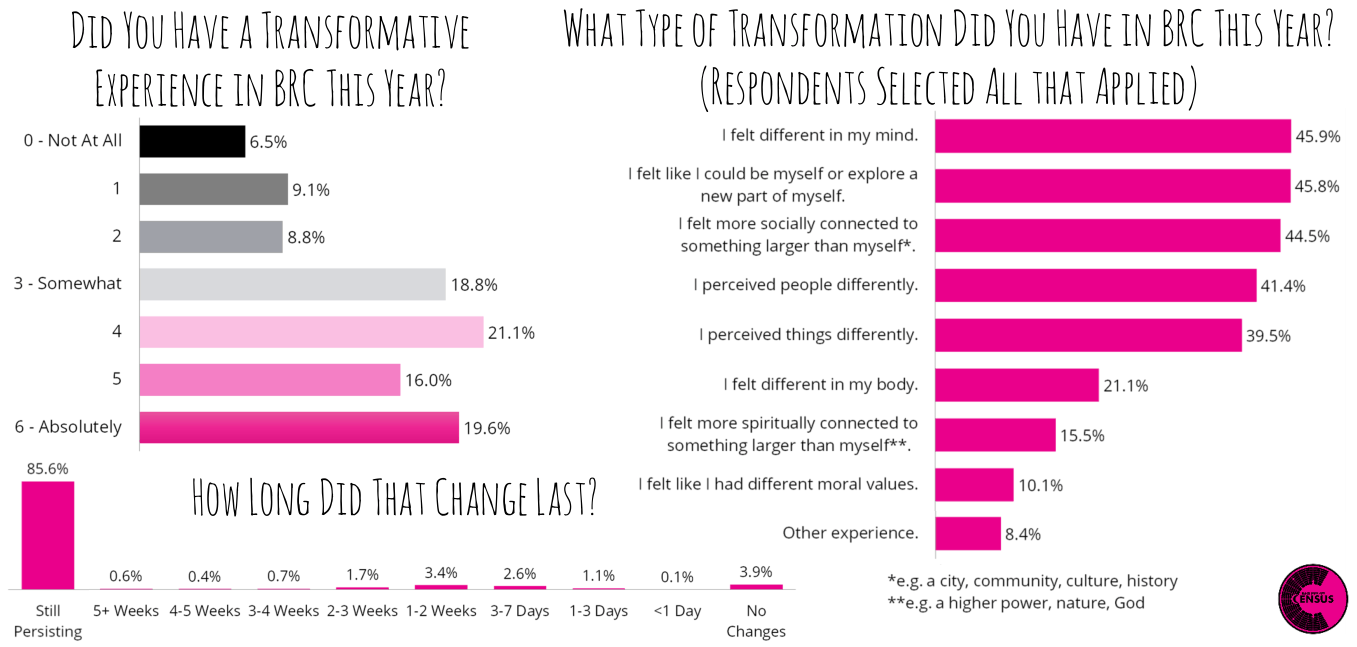
Transformative Experience
Burning Man Experience
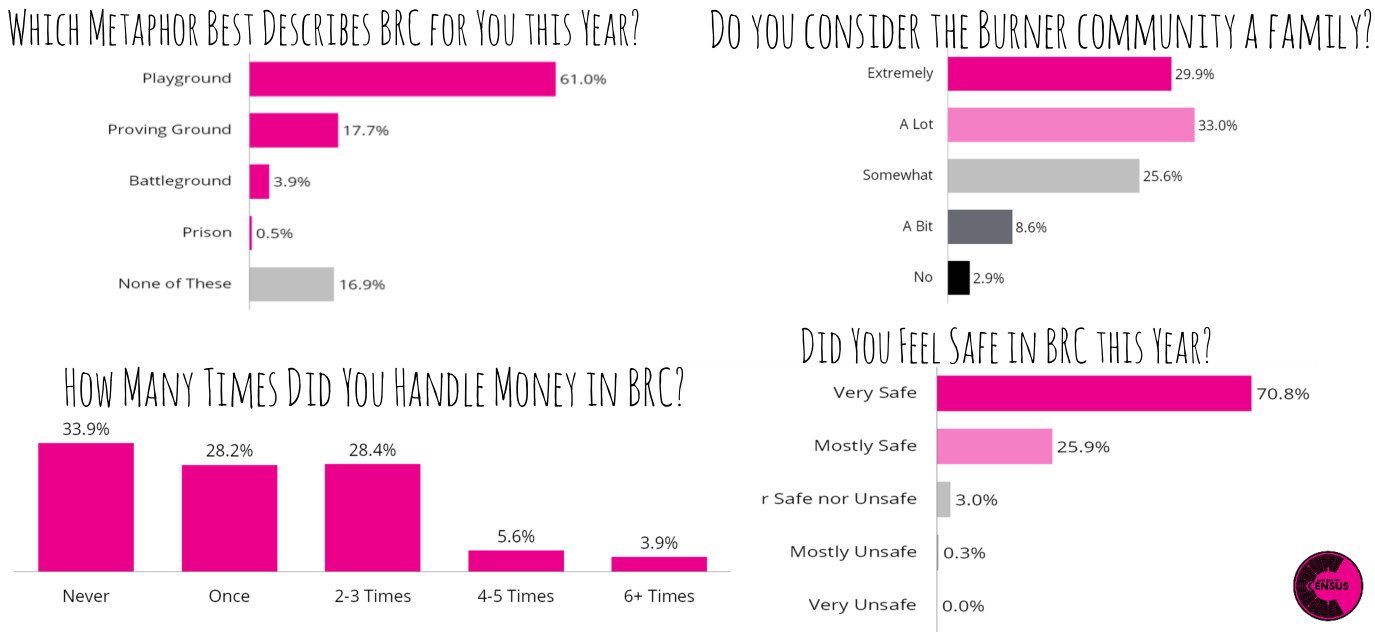
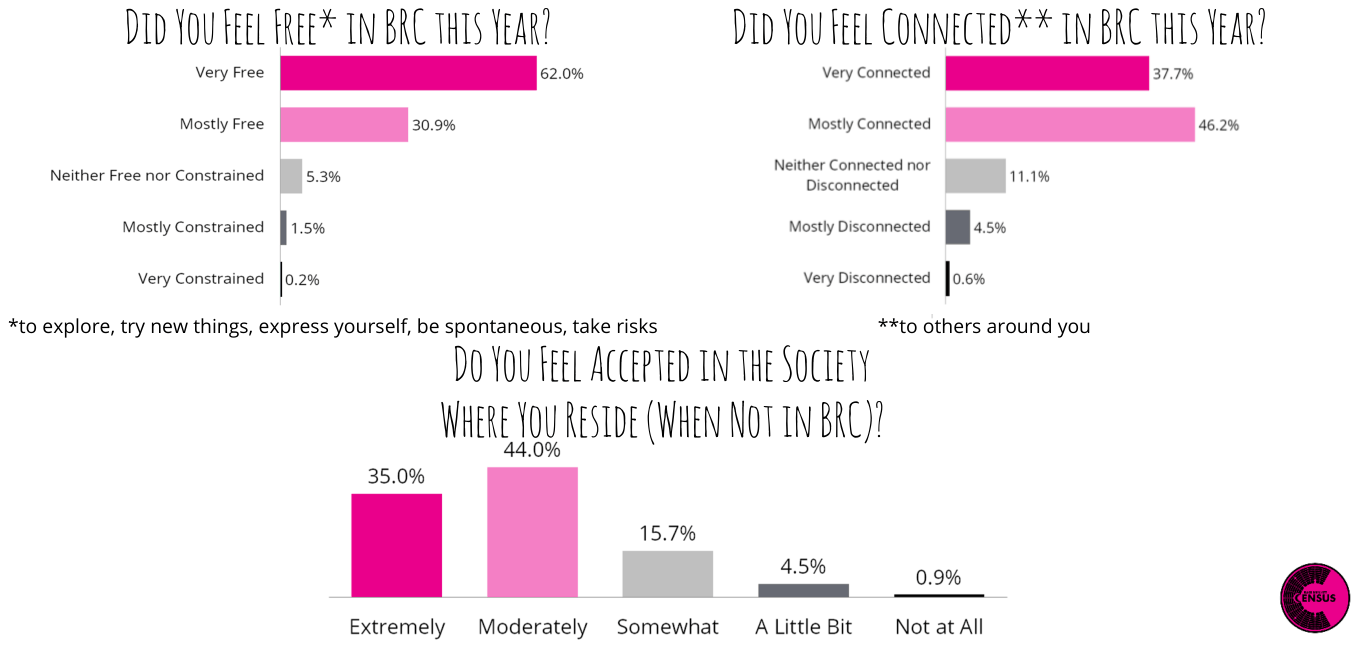
Transportation
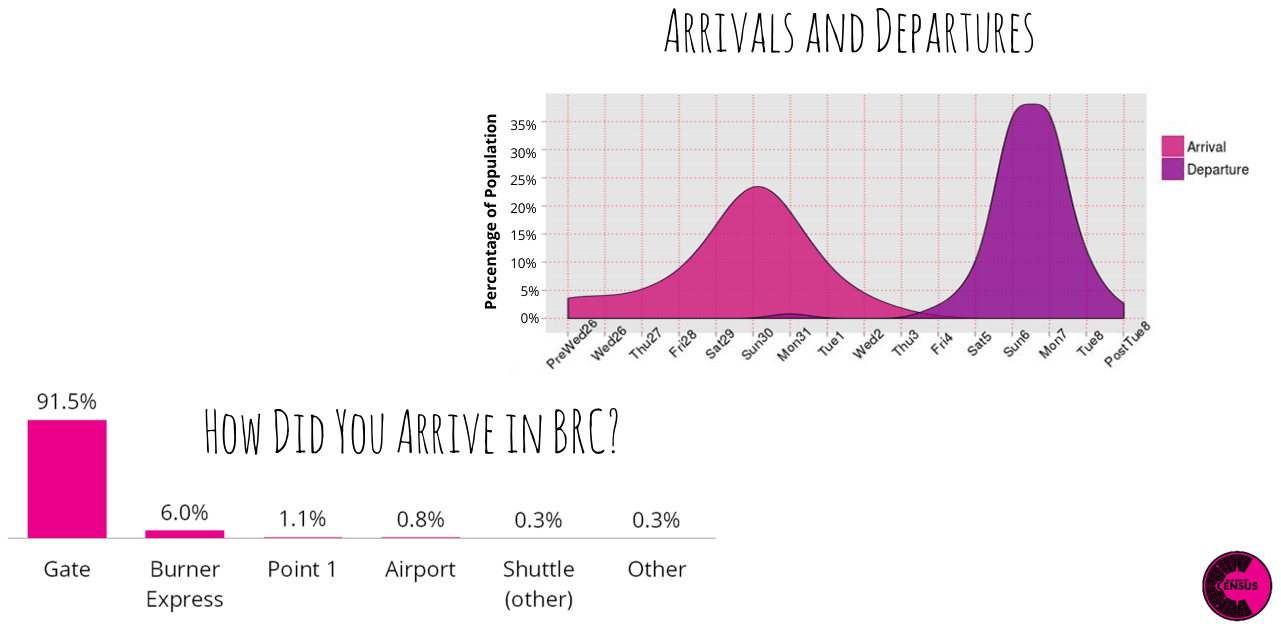
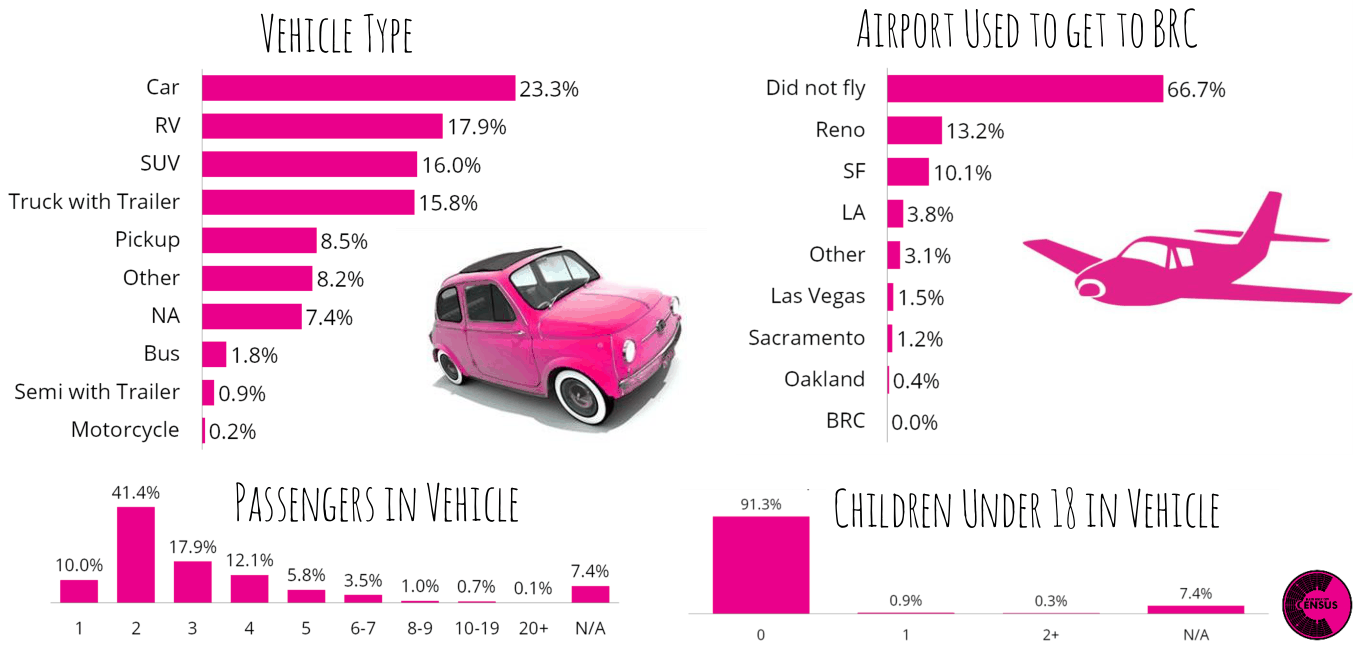
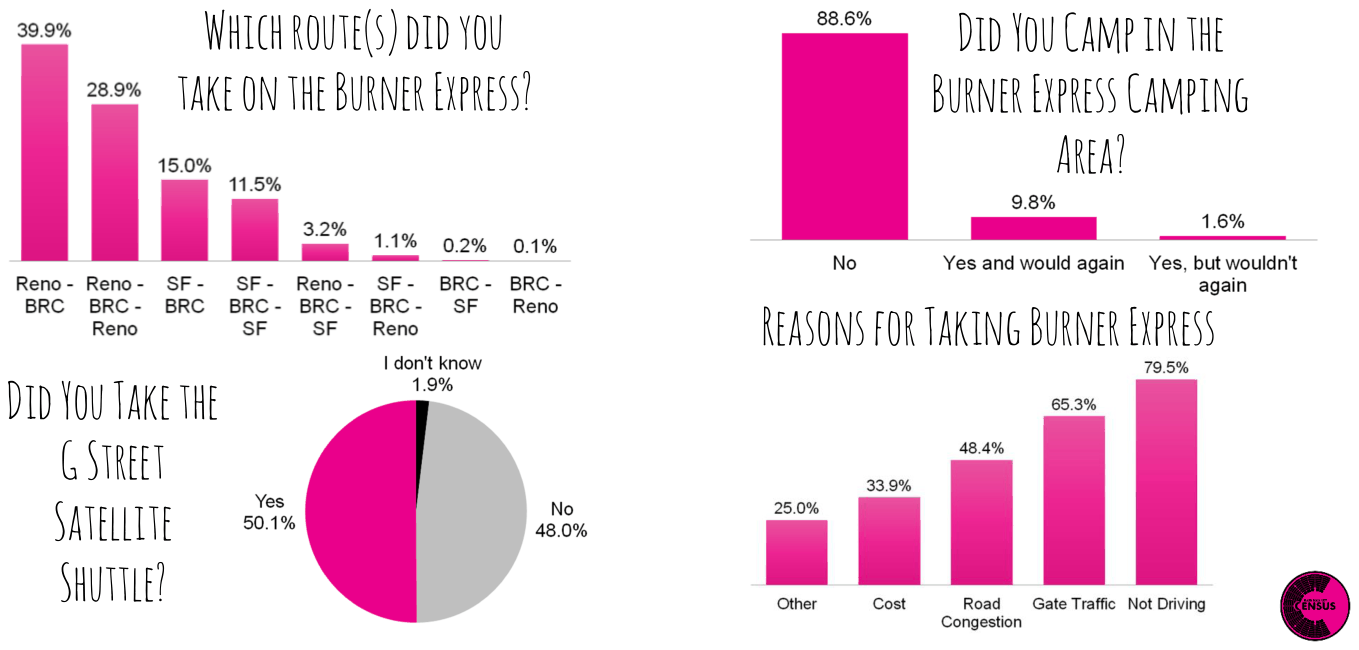
Burner Express Riders
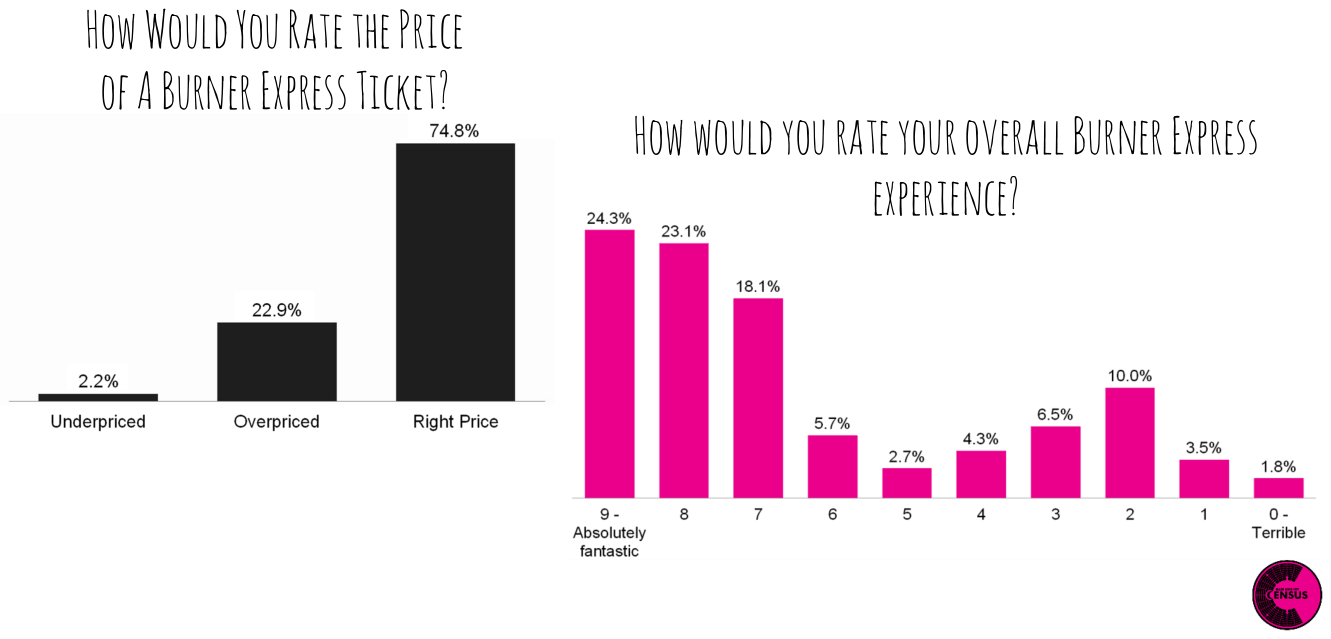
Burner Express Satisfaction
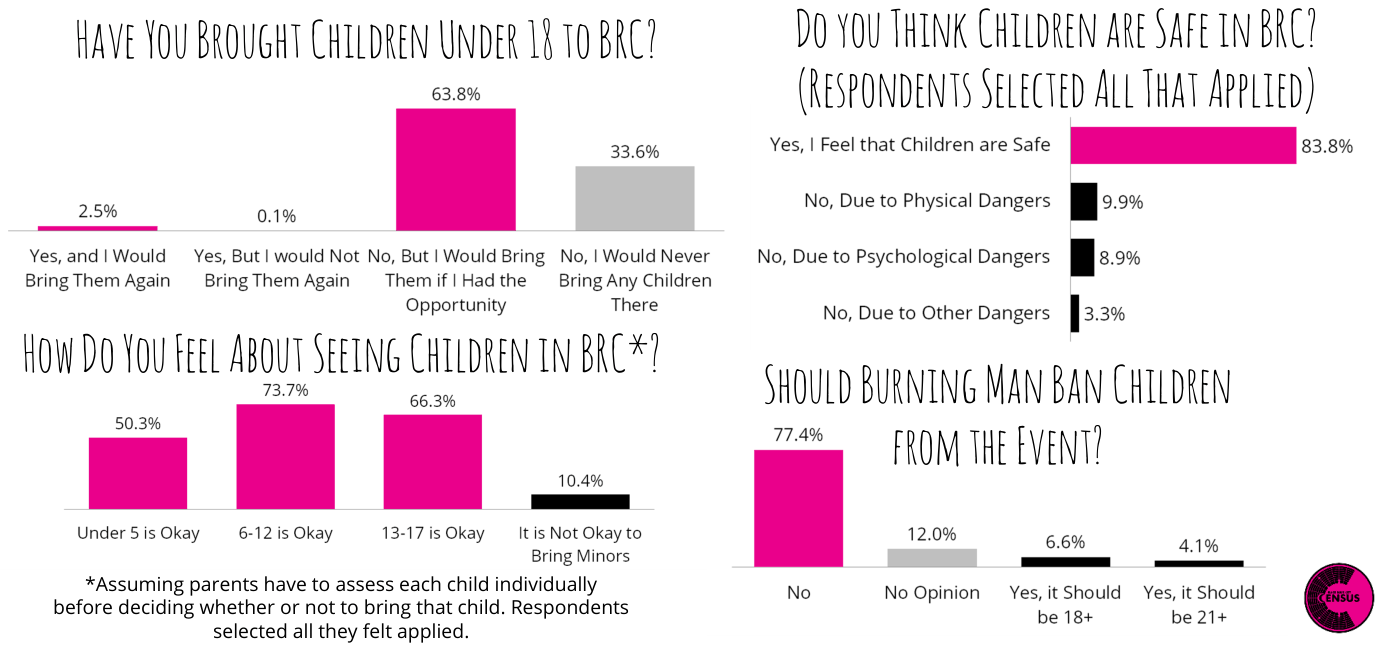
Minors in Black Rock City
People in Black Rock City
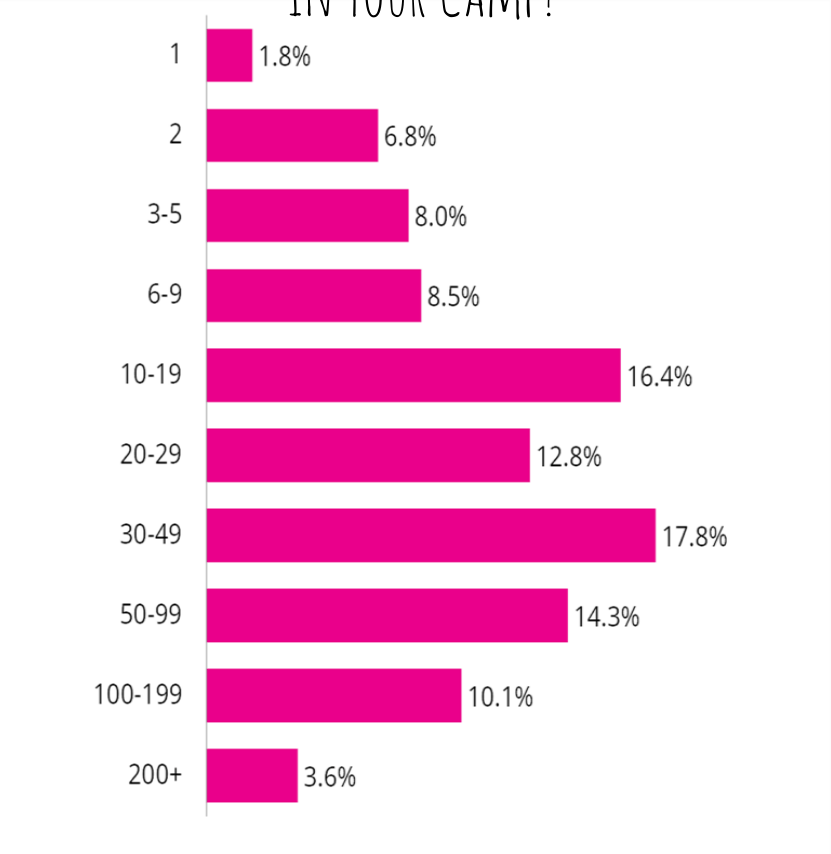
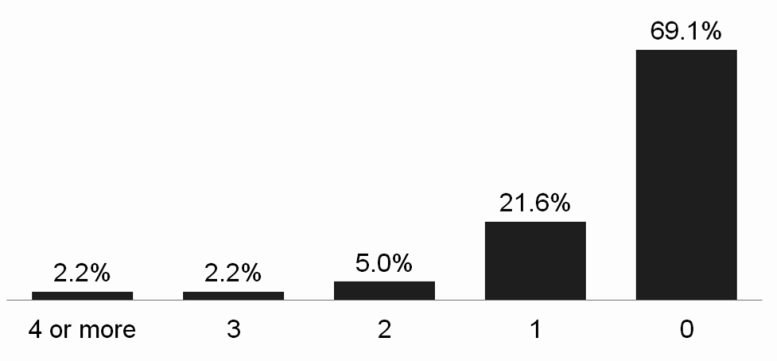
Number of People In Your Camp?
How Many of Your Family Members were in BRC this year? (Respondents Included Relatives, Spouses, Offspring and In-Laws)
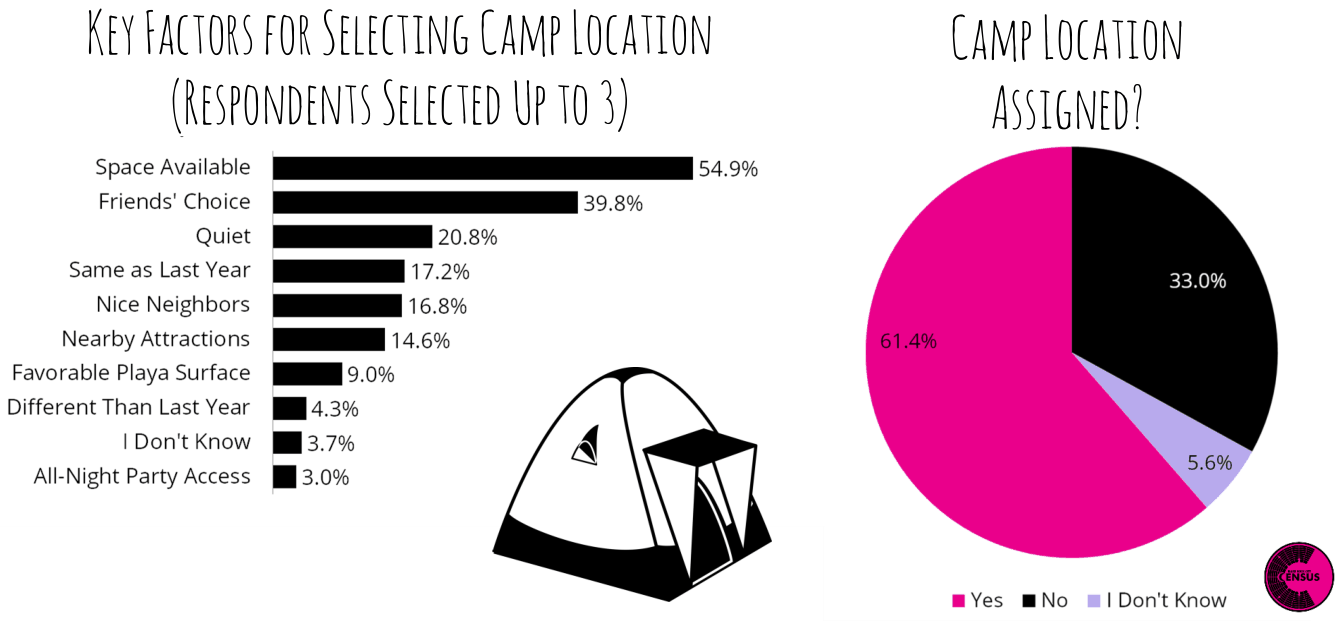
Camp Location Decisions
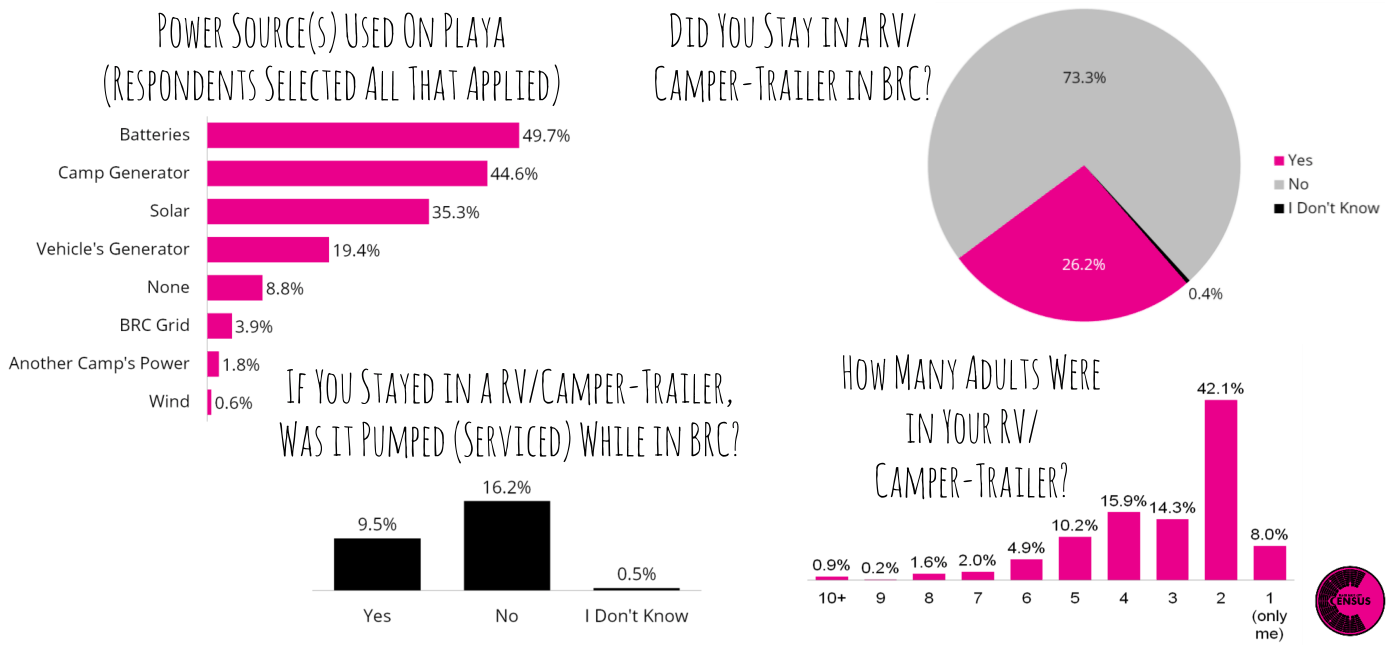
Power Source and RV/Camper Use
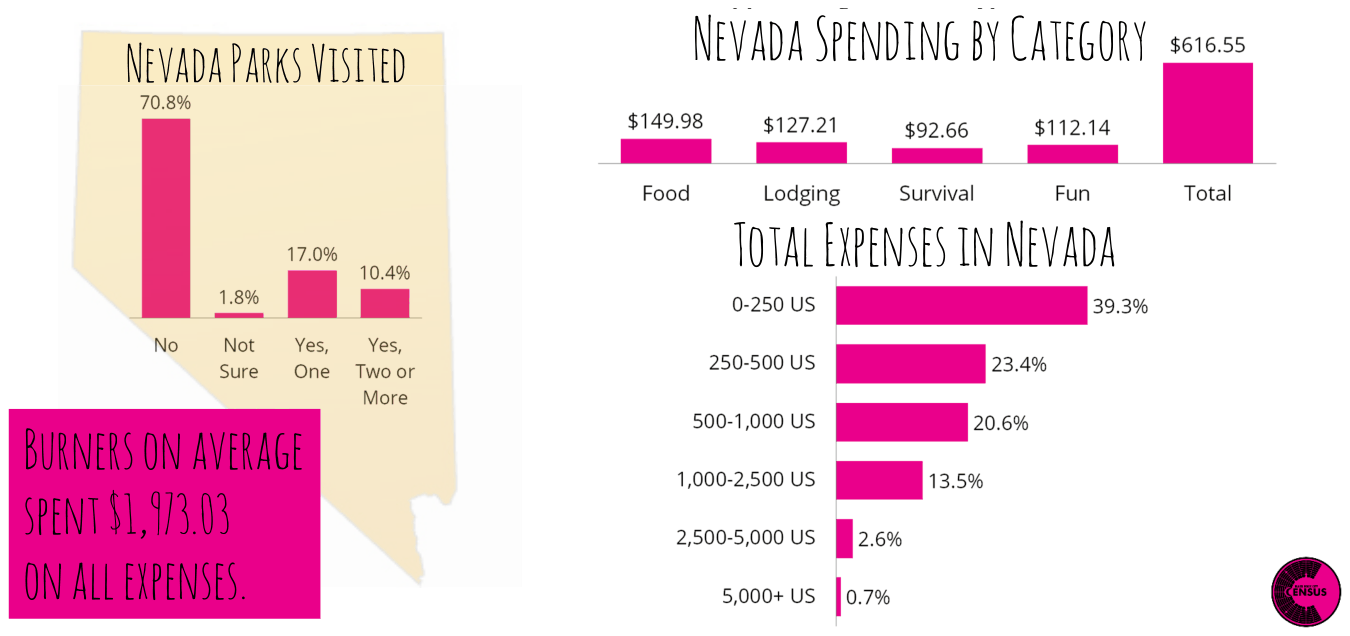
Economic Impact on Nevada
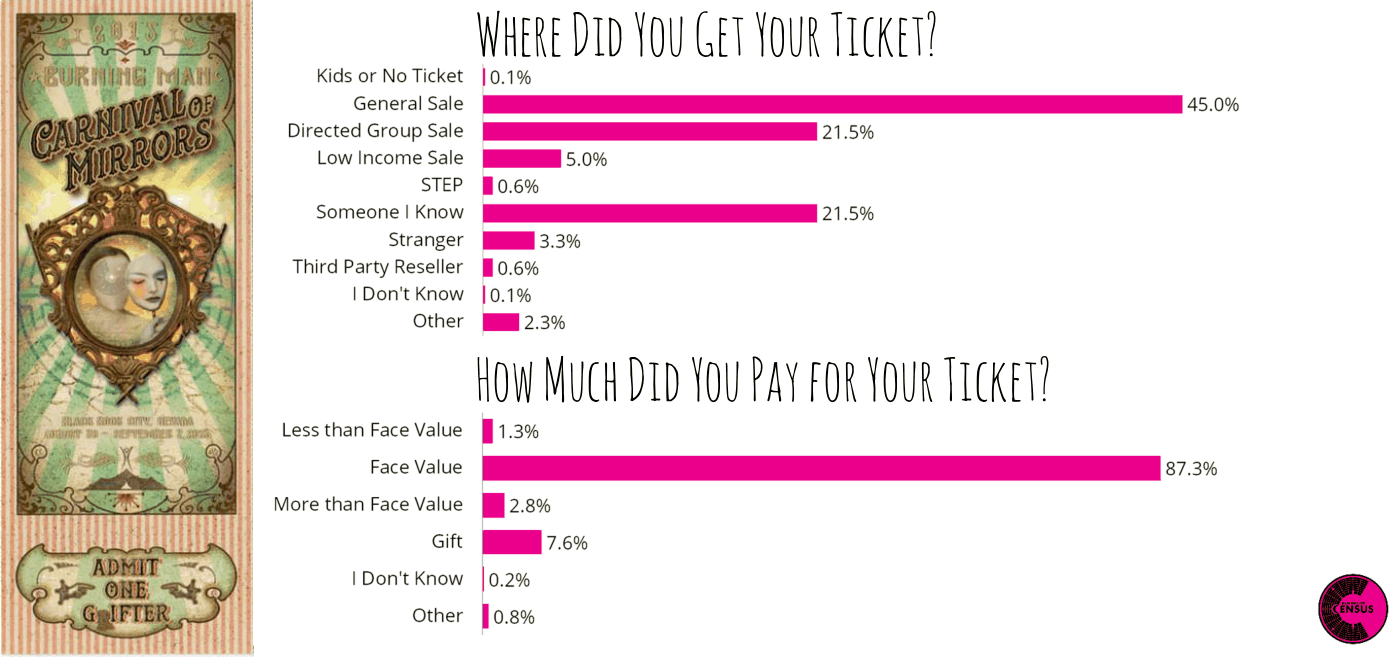
Ticket Sales
Census Team Information
Contributions and Acknowledgements
Principal investigators and project coordinators: S. Megan Heller (Countess), Dana Lilienthal DeVaul (DV8), Dominic Beaulieu-Prévost (Hunter), and Kateri McRae (Variance) Data analysis: Dominic Beaulieu-Prévost (Hunter), David Nelson-Gal (Scribble), Dana Lilienthal DeVaul (DV8) Report coordination, graphics, layout & design: Rebecca Mason (B^2), Aaron Shev (Murse), Dana Lilienthal DeVaul (DV8), S. Megan Heller (Countess), David Nelson-Gal (Scribble), Melissa Weintraub, Bianca Ruffin, Vernon Andrews, Rachel McKay The 2015 Census Lab: The project also involved more than 150 volunteers whose contributions were essential in many ways: research collaborators, volunteer coordinators, statisticians, camp builders, gate samplers, keypunchers, census lab hosts, graphic designers, and many more. These contributors will globally be referred to as “the Census Lab”. We would also like to thank the Burning Man organization for the resources that they provided both on playa and off playa and for believing in the project.
Still Curious?
To contact the Census Lab, please write to census@burningman.org
You can also access the Census Lab’s blog at http://journal.burningman.org/census
Citation: Heller, S.M., Beaulieu-Prévost, D., DeVaul, D.L., McRae, K., and the 2015 Census Lab. (2016). 2015 Black Rock City Census: Weighted results report. Black Rock City Census. Copyright © 2016 Heller et al.
This is an open-access report distributed under the terms of Creative Commons Attribution License, which permits unrestricted use, distribution, and reproduction in any medium, provided the original authors and source are credited.